
Oily skin that still feels tight, uncomfortable or even slightly dry can be confusing. If your face becomes shiny throughout the day, it seems logical to assume that your skin already has enough moisture. In reality, oil and hydration are two different things. Your skin can produce plenty of sebum while still lacking water, which is why oily and combination skin can become dehydrated too. Instead of simply trying to remove more oil, the better approach is to treat both concerns separately. Targeted products such as the DS V-LINE 42 Sebum Balancing Sulfur Serum can be used where excess sebum and imperfections are the concern, while lightweight hydration should remain a separate part of the routine.
Can Oily Skin Really Be Dehydrated?
Yes. Oily skin generally produces more sebum, while dehydration refers to a lack of water within the skin. This means your forehead, nose or chin can become visibly shiny while your skin still feels tight after cleansing or less comfortable than usual. You might also notice that makeup sits unevenly, the complexion looks dull despite the shine or fine dehydration lines become more noticeable. This combination is one of the reasons why simply choosing stronger oil-control products does not always improve oily skin. Removing surface oil can temporarily reduce shine, but it does not replace missing hydration. If you want to understand the broader difference between naturally dry skin and temporary dehydration, our Dry & Dehydrated Skin Guide covers this topic in more detail.
Why Does Oily Skin Become Dehydrated?
A common reason is an overly aggressive skincare routine. When shine, visible pores or clogged pores are the main concern, it is tempting to cleanse frequently, use strong foaming products and add several exfoliating or oil-control treatments at once. Each product might make sense individually, but together they can create a routine that is more intensive than your skin currently needs. Environmental factors can contribute as well. Cold weather, heated indoor spaces, air conditioning, low humidity, hot water and frequent washing can all influence how hydrated the skin feels. Active ingredients such as AHA, BHA and retinol can still have an important place in an oily-skin routine, but frequency matters. If your skin becomes increasingly tight or uncomfortable, adding another active product is rarely the first thing it needs.
The Biggest Mistake: Trying to Dry Out Oily Skin
Less oil does not automatically mean healthier-looking skin
One of the most common mistakes with oily skin is building the entire routine around removing sebum. A strong cleanser is followed by an exfoliating treatment and another active serum, while moisturizer is skipped because it seems unnecessary for oily skin. The result may be a temporarily matte complexion, but the tight feeling that follows is not necessarily a sign that the routine is working particularly well. It is more useful to treat oil control and hydration as two separate goals. You can continue addressing excess sebum, pores or congestion while giving hydration its own place in the routine. This is especially relevant for combination skin, where the T-zone may become oily while other areas feel noticeably less comfortable.
What Does Oily but Dehydrated Skin Actually Need?
Focus on lightweight hydration rather than immediately switching to rich skincare
Oily but dehydrated skin does not necessarily need the same products as naturally very dry skin. The aim is to introduce hydration without making every layer unnecessarily rich or heavy. Humectants such as hyaluronic acid and glycerin are particularly useful because they help attract and retain water. A lightweight hydrating serum can therefore fit very well into an oily-skin routine, followed by moisturizing care suited to your individual skin. This is an important distinction: the goal is not to stop your skin from producing oil altogether, but to improve hydration while continuing to manage excess sebum where necessary.
Hyaluronic Acid for Oily but Dehydrated Skin
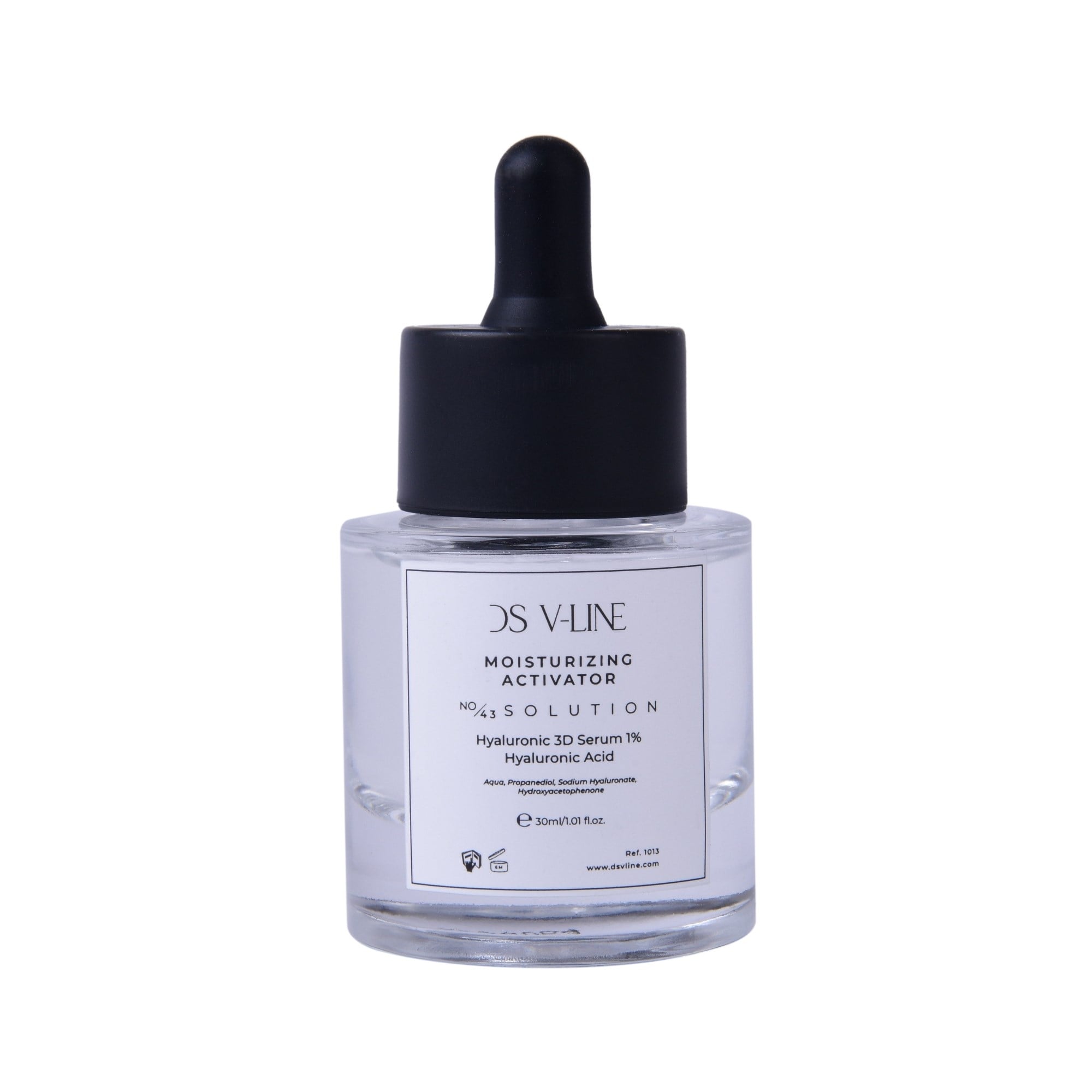
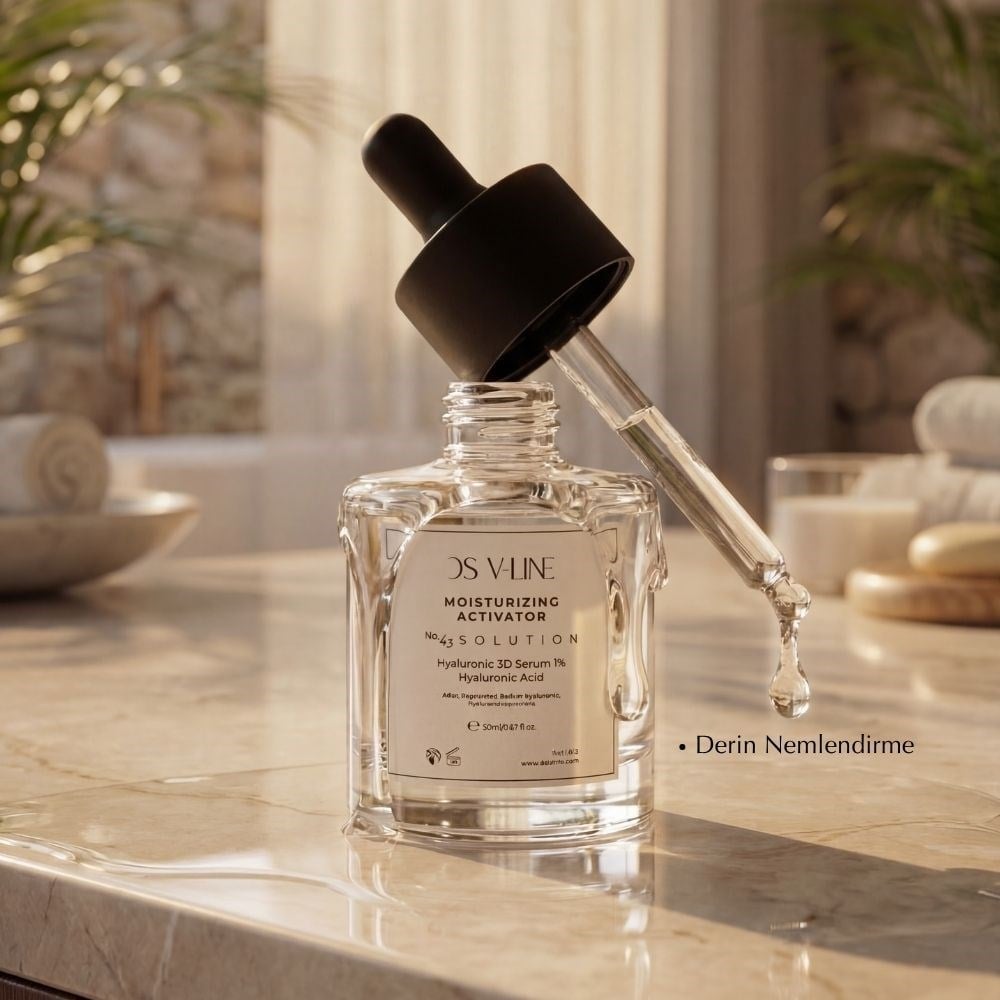
Hyaluronic acid is particularly relevant when oily skin feels dehydrated because it can provide a dedicated hydration step without requiring a rich, oily texture. For this reason, our main DS V-LINE recommendation for oily but dehydrated skin is the 43 Moisturizing Hyaluronic 3D Serum. Its multi-molecular hyaluronic acid system is designed to support hydration and a plumper, smoother-looking complexion while fitting easily underneath the next steps of a skincare routine. If your skin becomes shiny throughout the day but feels tight after cleansing, we would prioritize a product like the 43 Serum before simply introducing stronger oil-control treatments.
Should You Use Niacinamide on Oily, Dehydrated Skin?
Niacinamide can be particularly interesting for oily skin because it is commonly used in routines targeting excess sebum, visible pores and uneven-looking skin. However, this does not mean that every niacinamide serum should automatically become the hydration step of your routine. The DS V-LINE Brightening Niacinamide Serum contains 15% niacinamide together with 5% glycolic acid. It is therefore a targeted active treatment for concerns such as sebum balance, visible pores and uneven tone rather than a simple everyday hydration serum. If your skin is currently noticeably dehydrated or uncomfortable, we would focus on hydration first and introduce the 45 Serum according to tolerance when oiliness, pores or uneven texture remain additional concerns.
A Simple Routine for Oily but Dehydrated Skin
Give every product in your routine a clear purpose
You do not need a complicated ten-step routine to care for oily but dehydrated skin. In the morning, start with gentle cleansing according to your skin's needs, follow with a lightweight hydrating serum, use a suitable moisturizer and finish with broad-spectrum sunscreen. In the evening, cleanse the skin and choose between a hydration-focused routine or a targeted treatment depending on the day. A simple structure could therefore look like Gentle Cleanser → Hydrating Serum → Moisturizer → SPF in the morning and Gentle Cleanser → Hydration or Targeted Treatment → Moisturizer in the evening. If you are unsure where different serums and active ingredients belong, the DS V-LINE Skincare Routine Order Guide explains how to layer your products correctly.
Should You Stop Using AHA and BHA?
Oily skin may still benefit from exfoliation, but more is not always better
If clogged pores and uneven texture are also concerns, exfoliating acids can still be useful. The important question is not simply whether you use an acid, but how many exfoliating products are present in your routine and how frequently you use them. If your skin has started feeling increasingly tight, rough or uncomfortable, look at the entire week rather than evaluating each product separately. An exfoliating cleanser, acid toner and peeling serum may all contribute to the overall intensity of your routine. For congestion specifically, our AHA vs. BHA for Clogged Pores Guide explains the different roles of these exfoliating acids. Hydration and exfoliation should still be treated as separate goals rather than expecting stronger exfoliation to correct dehydrated skin.
What About Retinol?
Dehydration is a reason to review your routine, not necessarily abandon retinol
Having oily skin does not prevent you from using retinol, but the condition of your skin should influence how frequently you use it. If your skin already feels tight and you are simultaneously using retinol, acids and other active treatments, increasing the frequency of those products can make it difficult to determine what your skin actually tolerates. Hydration-focused evenings between active-treatment nights can make the routine much easier to manage. If you are new to retinoids, our Retinol for Beginners Guide explains how to introduce retinol gradually rather than immediately using it every night.
Oily but Dehydrated Skin or a Damaged Skin Barrier?
The two concerns can overlap, but they are not interchangeable
Dehydration primarily refers to insufficient water, while a compromised skin barrier involves the protective function of the skin and can be associated with increased sensitivity, persistent discomfort, dryness or unusual reactivity. If your skin is oily and feels slightly tight but otherwise comfortable, reviewing hydration and the intensity of your routine may be the more obvious starting point. If products you previously tolerated suddenly cause discomfort or your skin has become persistently sensitive and reactive, barrier-focused care may deserve more attention. We cover this separately in our Skin Barrier Repair Guide, so the two concerns do not need to be treated as the same problem.
5 Things to Change When Oily Skin Feels Dehydrated
Small adjustments can be more useful than replacing your entire routine
First, stop using the feeling of completely oil-free, tight skin as a measure of successful cleansing. Second, introduce a dedicated lightweight hydration step such as the 43 Moisturizing Hyaluronic 3D Serum. Third, look at how many active products you use across an entire week rather than on a single evening. Fourth, do not automatically skip moisturizer simply because your skin becomes shiny; choose a texture appropriate for your skin instead. Finally, keep the routine consistent long enough to understand how your skin responds. Constantly switching between products makes it much harder to distinguish between persistent oiliness and temporary dehydration.
DS V-LINE Tip: Hydration First, Oil Control Second
Treat the two concerns individually instead of asking one product to solve everything
If your skin currently feels noticeably dehydrated, start by making hydration a consistent part of your routine. The 43 Moisturizing Hyaluronic 3D Serum would be our first choice for this purpose because it gives hydration a dedicated place without turning the routine into heavy dry-skin care. Once the skin feels more comfortable, persistent concerns such as excess sebum, enlarged-looking pores or uneven texture can be addressed separately. The DS V-LINE Brightening Niacinamide Serum can then be considered as a targeted evening treatment, keeping in mind that its 5% glycolic acid makes it a more active formula. This approach is usually more logical than repeatedly trying to “dry out” oily skin.
Frequently Asked Questions About Oily but Dehydrated Skin
Why is my skin oily but still feels dry and tight?
Oiliness is related to sebum production, while dehydration refers to water content. Your skin can therefore produce plenty of oil while still lacking hydration. If your face feels tight after cleansing but becomes shiny again later, it is worth reviewing both your cleansing routine and your hydration steps.
Can oily skin use hyaluronic acid?
Yes. Hyaluronic acid is not limited to dry skin types. Because it is used as a humectant, a lightweight hyaluronic acid serum can be particularly useful when oily or combination skin needs additional hydration without a very rich texture.
Should oily, dehydrated skin use moisturizer?
Yes, oily skin can still benefit from moisturizing care. Instead of automatically skipping moisturizer, choose a texture that works with your skin and the other products in your routine.
Is niacinamide good for oily but dehydrated skin?
Niacinamide can fit well into routines targeting sebum and visible pores, but the complete formulation matters. The DS V-LINE 45 Brightening Niacinamide Serum also contains 5% glycolic acid, so it should be viewed as a targeted active treatment rather than your basic hydration step.
Should I stop exfoliating if my skin feels dehydrated?
Not necessarily, but it is worth reviewing how frequently you exfoliate and whether several exfoliating products are being combined. If your skin feels increasingly tight or uncomfortable, reducing the overall intensity of your routine while focusing on hydration can be a sensible approach.
How do I know whether my skin is dehydrated or my skin barrier is compromised?
The signs can overlap, but dehydration mainly refers to insufficient water, while barrier concerns may also involve persistent sensitivity, reactivity or discomfort. For a detailed explanation of the latter, see the DS V-LINE Skin Barrier Repair Guide.