
Getting pimples when your skin already feels dry can be confusing. You may notice tightness, rough patches or flaking while still dealing with occasional breakouts, clogged-looking areas or individual blemishes. The important thing to understand is that dryness and breakouts are not mutually exclusive. Your skin can feel dry on the surface while still developing imperfections for completely different reasons. Rather than trying to dry out every blemish, the goal should be to understand what your skin is actually responding to and build a routine that does not create another problem while treating the first one.
Can You Have Pimples and Dry Skin at the Same Time?
Yes. Having dry skin does not mean that your pores cannot become congested or that blemishes cannot appear. Dryness describes the way your skin behaves and feels, while breakouts can have several different causes. For example, aggressive cleansing or frequent exfoliation may leave your skin feeling dry while your routine is still not addressing the factors contributing to individual blemishes. Similarly, using several strong treatments at once can make the skin feel uncomfortable without necessarily giving you clearer-looking skin.
This is why treating dry, breakout-prone skin is usually less about finding the strongest acne product and more about finding the right balance between gentle care and targeted treatment.
Why Do I Get Breakouts Even Though My Skin Feels Dry?
One common reason is that the skin is being treated too aggressively. If you repeatedly use harsh cleansers, exfoliating products or multiple active ingredients because you are trying to prevent pimples, your skin may become increasingly dry and uncomfortable. At the same time, the original cause of your breakouts may still be present.
Another possibility is that your skin simply has different needs in different areas. You may experience dryness around the cheeks while seeing more imperfections around the forehead, nose or chin. In this situation, applying the same intensive treatment across your entire face may not be necessary. Your skincare products can also play a role. A routine that contains too many rich, active or irritating products can make it difficult to understand what your skin actually needs. Keeping the basic routine simple and treating individual concerns selectively can make skincare much easier to manage.
Dry Skin Does Not Mean You Should Skip Moisturizer
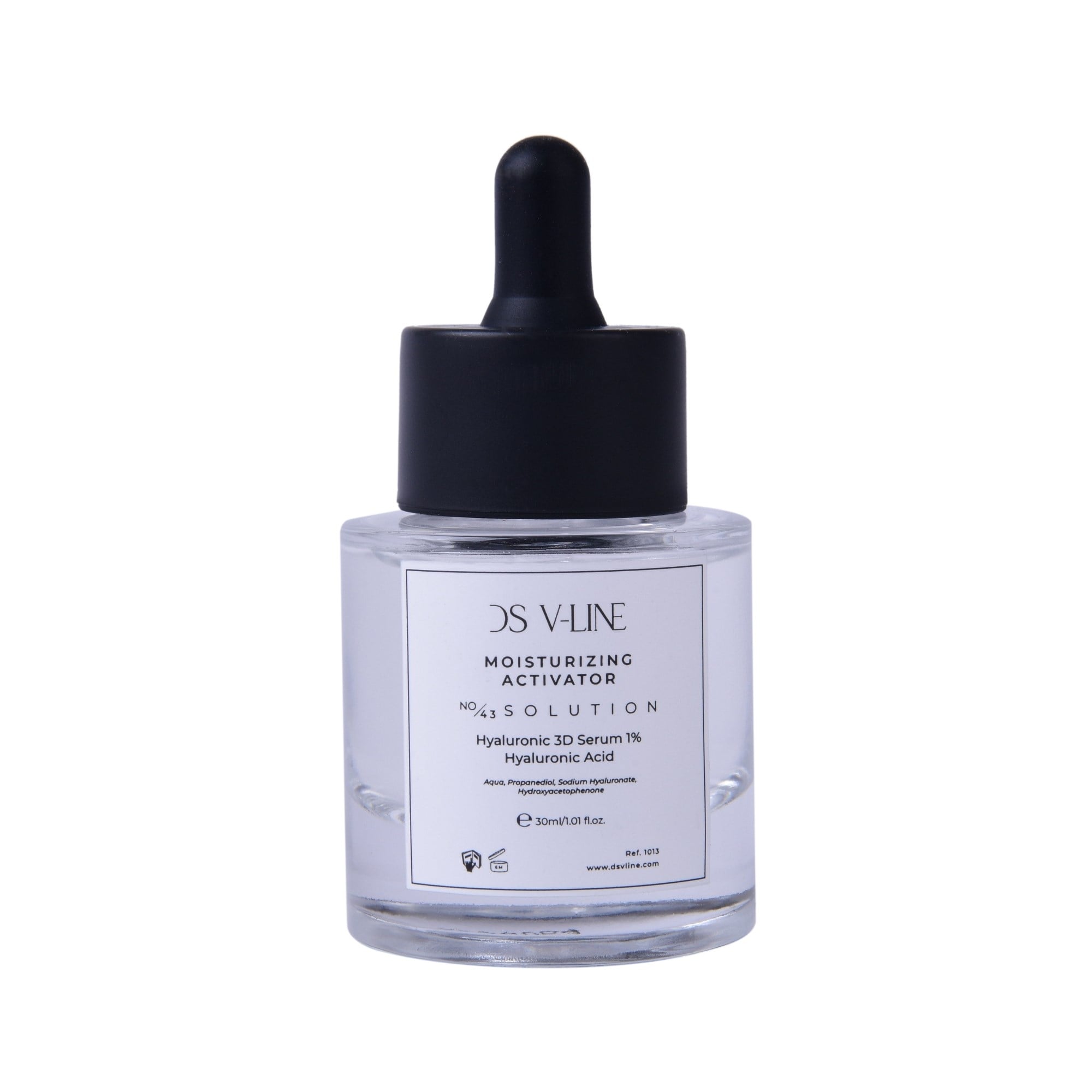
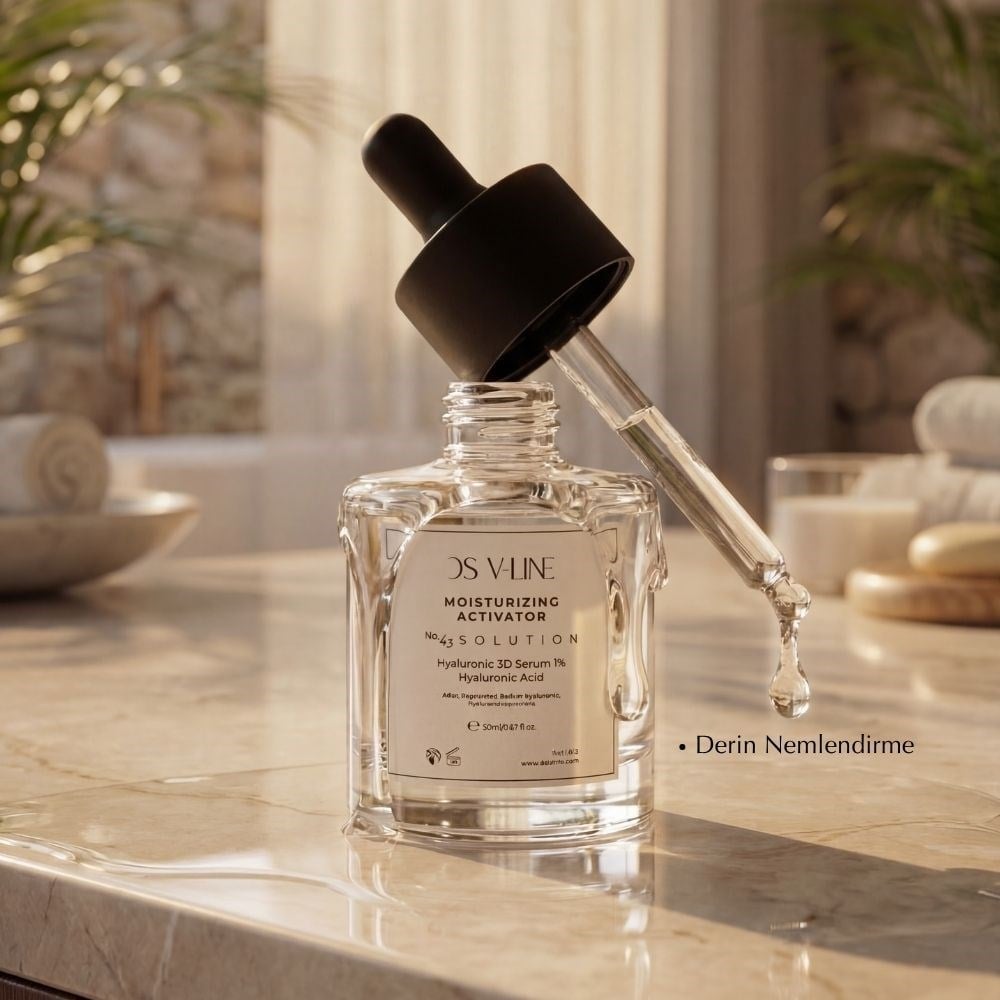
One of the most common mistakes when dealing with pimples is avoiding hydration altogether. If your skin feels dry, reducing every moisturizing step in an attempt to prevent breakouts may leave it feeling even more uncomfortable. Instead, hydration should remain part of the routine while targeted products are used only where they make sense. The DS V-LINE 43 Moisturizing Hyaluronic 3D Serum can be used as a dedicated hydration step after cleansing and before moisturizer. Hyaluronic acid is a humectant that helps attract and retain water, making it useful when the main concern is a lack of hydration rather than simply adding more oil to the skin. This approach allows you to separate hydration from targeted blemish care instead of expecting one product to solve every concern.
Which Ingredients Can Help Dry, Breakout-Prone Skin?
There is no single ingredient that is right for every case of dry, acne-prone skin. The better approach is to choose ingredients according to the specific concern you are trying to address. Hyaluronic acid is primarily useful when your skin needs additional hydration. It can be incorporated into a routine without making hydration dependent on using a heavy product. Niacinamide can be useful when concerns such as sebum balance, visible pores and an uneven-looking complexion occur alongside dryness. The DS V-LINE 45 Brightening Niacinamide Serum contains 15% niacinamide together with 5% glycolic acid. Because of the glycolic acid, it should be treated as an active treatment rather than as a simple hydrating niacinamide serum. Start gradually and pay attention to how your skin responds.
For individual blemishes and areas where excess sebum is more noticeable, the DS V-LINE 42 Sebum Balancing Sulfur Serum is designed for targeted application. Its formula combines sulfur with salicylic acid, calamine and zinc oxide and is intended to help balance excess sebum, cleanse pores and improve the appearance of localized imperfections without focusing on drying out the entire face.
Should You Treat Your Whole Face When You Only Have a Few Pimples?
Not necessarily. If your skin is generally dry but you occasionally develop individual blemishes, treating your entire face with strong active products may be unnecessary. A more targeted approach can make sense: keep the rest of your routine focused on gentle cleansing and hydration, while applying a suitable treatment only to areas that actually need it. This is particularly relevant when using concentrated treatments designed for localized imperfections.
The DS V-LINE 42 Sebum Balancing Sulfur Serum, for example, is specifically designed for localized application rather than being used as a conventional all-over serum. According to the product instructions, it is applied in the evening to selected areas and rinsed off in the morning.
Skincare Mistakes That Can Make Dry, Breakout-Prone Skin Feel Worse
Trying to remove every trace of oil is one of the easiest ways to make a dry skin routine more aggressive than it needs to be. Your skin does not need to feel tight after cleansing to be clean. Another common mistake is combining several exfoliating treatments without considering the complete formulation of each product. For example, the DS V-LINE 45 Brightening Niacinamide Serum contains both niacinamide and glycolic acid, so it should be introduced thoughtfully rather than automatically combined with several other exfoliating treatments.
It is also worth avoiding the temptation to change your entire routine every time a new blemish appears. Occasional breakouts do not necessarily mean that every product in your routine is wrong. Give your routine enough consistency to understand how your skin responds before making several changes at once.
How to Build a Simple Routine for Dry, Breakout-Prone Skin
A routine for dry, breakout-prone skin does not have to contain a long list of products. In the morning, start with a gentle cleanse if needed, followed by a hydrating serum, moisturizer and sunscreen. In the evening, cleanse the skin and then decide whether you actually need a targeted treatment that day. If hydration is the main concern, the DS V-LINE 43 Moisturizing Hyaluronic 3D Serum can provide a dedicated hydration step. If a specific area needs targeted blemish care, a localized treatment such as the DS V-LINE 42 Sebum Balancing Sulfur Serum can be used according to its instructions.
If you want to introduce the DS V-LINE 45 Brightening Niacinamide Serum, remember that its 5% glycolic acid content makes it an active treatment. The product recommends starting at 2–3 evenings per week and increasing frequency according to skin tolerance. The key is not to use every active ingredient at the same time. A simpler routine makes it easier to see which products your skin actually benefits from.
What If Your Skin Is Dry in Some Areas and Breaks Out in Others?
This is actually quite common. Your face does not necessarily behave the same way everywhere. The cheeks may feel dry while the T-zone becomes shiny or develops occasional blemishes. Instead of categorizing your entire face as either “dry” or “oily,” consider the individual areas and concerns. Hydration can remain a priority for areas that feel dry, while targeted care can be reserved for areas where imperfections or excess sebum are more noticeable.
This type of approach can help prevent the cycle of repeatedly stripping the entire face simply because a small area is prone to breakouts.
Frequently Asked Questions
Why am I getting pimples even though my skin is dry?
Dryness does not prevent pores from becoming congested or blemishes from appearing. Breakouts can occur alongside dry skin, particularly when your skin has different needs in different areas or when your routine is too aggressive.
Should I moisturize if I have dry skin and pimples?
Yes. Dry, breakout-prone skin can still benefit from appropriate hydration. Avoiding moisturizer completely can make an already uncomfortable routine even more drying.
Is Hyaluronic Acid good for dry, breakout-prone skin?
Hyaluronic acid is primarily used to support hydration. It can be a useful addition when dryness or dehydration is part of your skincare concern, while targeted products can be used separately for localized blemishes.
Is Niacinamide suitable for dry skin with breakouts?
Niacinamide can be useful for routines focused on sebum balance, visible pores and an uneven-looking complexion. However, the complete formulation matters. The DS V-LINE 45 Brightening Niacinamide Serum also contains 5% glycolic acid, so it should be introduced as an active treatment rather than treated like a basic niacinamide-only serum.
Should I exfoliate dry, breakout-prone skin?
Exfoliation is not automatically necessary simply because you have breakouts. If you already experience dryness, sensitivity or discomfort, adding more exfoliation may not be the right first step. Consider what your skin actually needs before adding another active treatment.
What is the best skincare routine for dry, acne-prone skin?
The most useful routine is usually one that keeps the basics consistent while addressing individual concerns selectively: gentle cleansing, adequate hydration, appropriate moisturizing, daily sun protection and targeted treatment where needed. Your routine does not have to contain numerous active ingredients to be effective.
The Bottom Line
Getting pimples despite having dry skin does not mean that you need to use stronger and more drying products. In many cases, a better approach is to separate hydration from targeted blemish care and avoid treating your entire face as though it has the same needs.
Keep your basic routine simple, introduce active treatments gradually and use concentrated products where they are actually needed. For hydration, the DS V-LINE 43 Moisturizing Hyaluronic 3D Serum can be incorporated as a dedicated moisture step, while the DS V-LINE 42 Sebum Balancing Sulfur Serum can be used selectively for localized imperfections. If you are addressing sebum balance, visible pores or uneven-looking skin, the DS V-LINE 45 Brightening Niacinamide Serum can also be considered as an active treatment. Healthy-looking skin is not about removing every trace of oil or using the strongest possible treatment. It is about understanding what your skin needs and giving each concern the right level of attention.