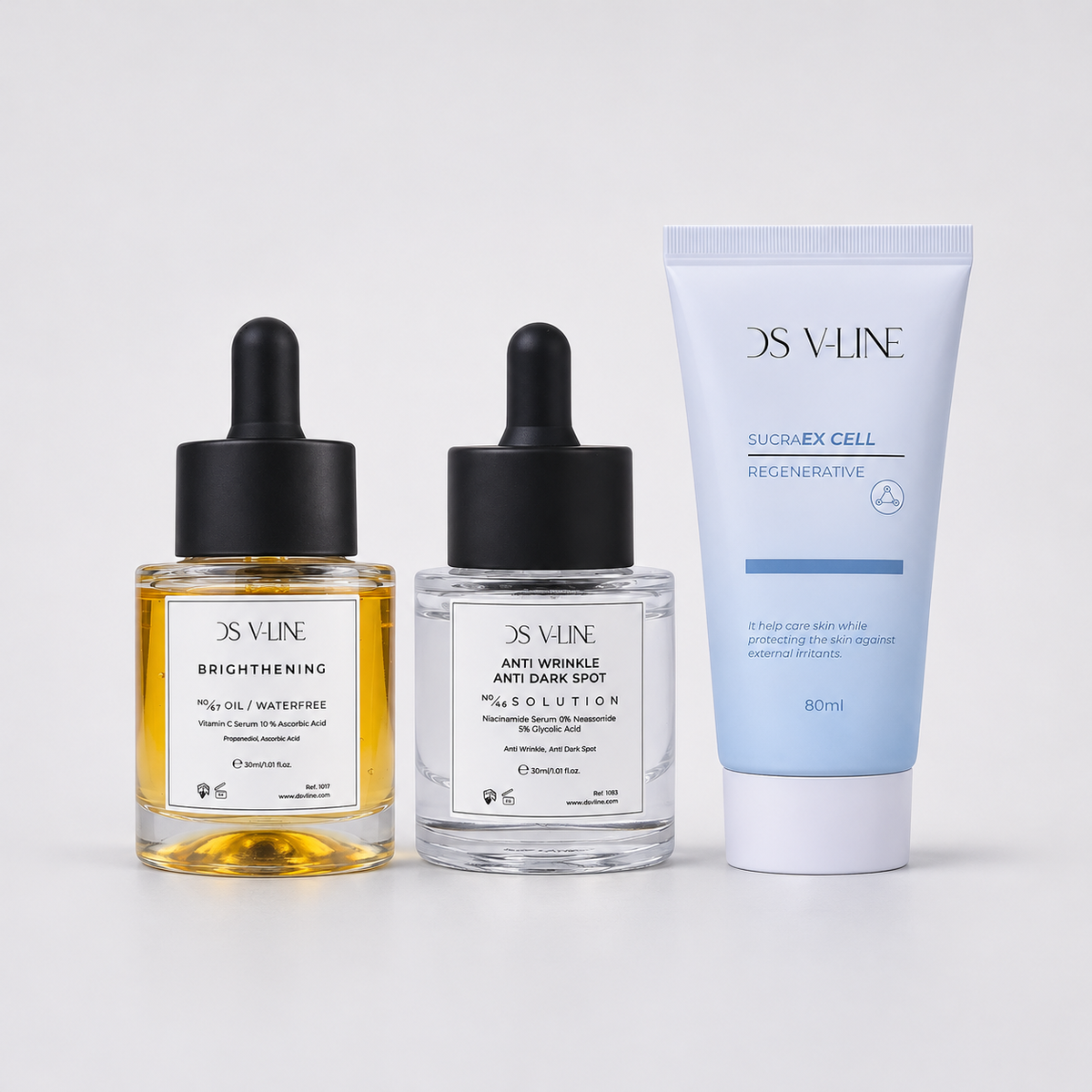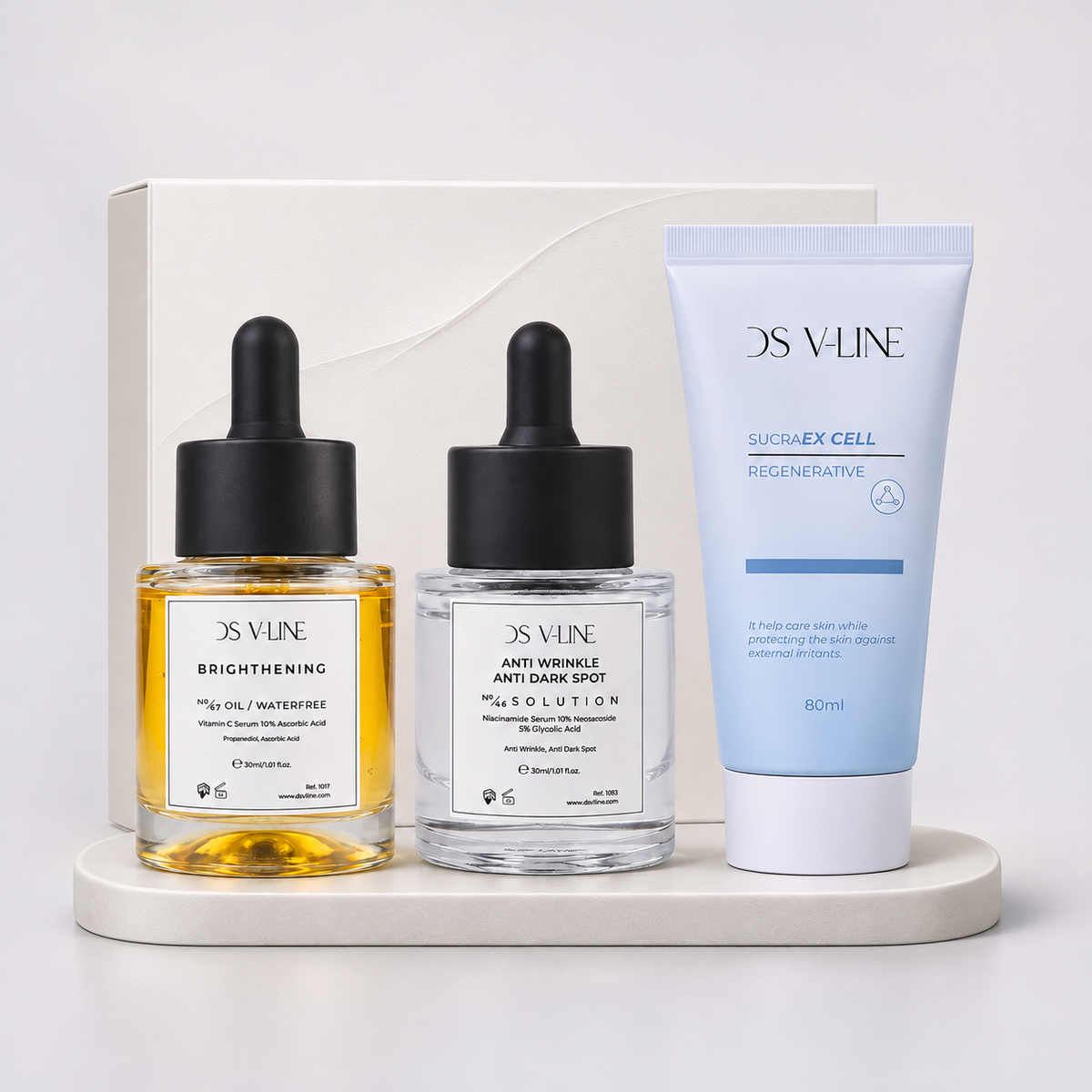

Glycolic acid has become one of the most popular ingredients in modern skincare, especially for anyone looking to improve dullness, uneven skin texture and the appearance of dark spots. But while glycolic acid can make a noticeable difference to how your skin looks and feels, using it correctly is just as important as choosing the right product. A good example is the DS V-LINE Brightening Niacinamide Serum, which combines 5% glycolic acid with 15% niacinamide to support a smoother, more even-looking complexion. In this guide, we'll explain what glycolic acid actually does for your face, how to introduce it into your skincare routine and which common mistakes you should avoid.
What Is Glycolic Acid and How Does It Work on the Skin?
Glycolic acid belongs to a group of exfoliating ingredients known as alpha hydroxy acids (AHAs). Unlike traditional facial scrubs, which physically remove dead skin cells through friction, glycolic acid works by helping loosen the bonds between dead skin cells on the surface. This allows them to shed more easily, revealing skin that looks smoother and more radiant. Glycolic acid is particularly interesting because of its relatively small molecular size, which contributes to its exfoliating properties. However, this also means that concentration, formulation and frequency of use matter. A stronger product or more frequent application does not automatically deliver better results. For most people, consistent and carefully introduced exfoliation is far more beneficial than an aggressive skincare routine.
What Are the Benefits of Glycolic Acid for Your Face?
One of the main reasons people choose glycolic acid is its ability to improve the appearance of uneven skin texture. When dead skin cells accumulate, the complexion can appear dull, rough or tired, even when the skin is otherwise healthy. Regular exfoliation can help make the skin's surface look smoother and more refined. Glycolic acid may also help improve the appearance of uneven skin tone and certain superficial dark spots over time, although deeper pigmentation concerns often require a more comprehensive approach. Fine lines can appear less noticeable as the skin's surface becomes smoother, but glycolic acid should not be considered a replacement for sun protection or other evidence-based anti-aging care. For those dealing with visible pores, exfoliation may help reduce surface buildup and make pores appear less prominent without actually changing their natural size. The key is patience: visible improvements usually develop gradually, and individual results depend on skin type, product formulation and consistent use.
How to Use Glycolic Acid in Your Skincare Routine
If you're new to glycolic acid, introducing it gradually is the best place to start. Begin with a few evenings per week rather than applying it every day, and pay attention to how your skin responds. After cleansing, apply your glycolic acid product according to its instructions, avoiding the delicate eye area and irritated or damaged skin. The DS V-LINE Brightening Niacinamide Serum is designed for evening use and combines exfoliating glycolic acid with niacinamide in a targeted formula for uneven-looking skin tone, visible pores and texture. Follow your treatment with a suitable moisturizer to support hydration and skin comfort. The DS V-LINE SucraEx Barrier Repair Cream can complement this routine by providing moisturizing, barrier-focused care. During the day, broad-spectrum sun protection is essential because AHAs can increase the skin's sensitivity to sunlight. The DS V-LINE Lumea SPF50 Sunscreen Cream provides UVA and UVB protection and can be incorporated into your morning routine.
The Most Common Glycolic Acid Mistakes
One of the biggest mistakes is using glycolic acid too frequently, particularly when your skin has not yet developed tolerance. Over-exfoliation can lead to redness, dryness, tightness and irritation, which may leave the complexion looking worse instead of better. Another common problem is combining glycolic acid with several other powerful active ingredients at the same time. Retinol, additional exfoliating acids and other intensive treatments are not necessarily incompatible with glycolic acid, but layering them without considering your skin's tolerance can increase irritation. Skipping moisturizer is another mistake, as exfoliation should always be balanced with sufficient hydration and barrier support. Perhaps the most important mistake is neglecting sunscreen. Since glycolic acid can increase sensitivity to UV radiation, daily sun protection is an essential part of a responsible exfoliating routine. If your skin starts burning, stinging persistently or becoming unusually sensitive, stop using the product and allow your skin to recover rather than increasing the application frequency.
Is Glycolic Acid Suitable for Every Skin Type?
Glycolic acid can be useful for normal, combination and oily skin, particularly when uneven texture or dullness is the main concern. However, people with dry or sensitive skin should approach exfoliating acids more carefully. If your skin barrier is already compromised, your face feels irritated or you are experiencing an active flare-up of a skin condition, introducing glycolic acid may not be appropriate until your skin has recovered. The concentration of the ingredient is only one part of the equation: the complete formulation, application frequency and your overall skincare routine also influence how well a product is tolerated. If you are unsure whether glycolic acid is suitable for your skin, professional dermatological advice can help you make an informed decision.
Final Thoughts: Consistency Matters More Than Intensity
Glycolic acid can be a valuable addition to a skincare routine focused on smoother texture, a brighter-looking complexion and more even-looking skin tone. But healthy-looking skin rarely comes from using the strongest products or combining as many active ingredients as possible. A balanced approach is usually more effective: introduce exfoliation gradually, keep your skin comfortably moisturized and protect it from the sun every day. With thoughtfully selected products such as the DS V-LINE Brightening Niacinamide Serum, supported by barrier-focused skincare and reliable sun protection, glycolic acid can become part of a simple, consistent routine that works with your skin rather than against it.