
Vitamin C and niacinamide are two of the most popular ingredients in modern skincare, but choosing between them is not always straightforward. Both can be used in routines focused on a brighter and more even-looking complexion, yet they have different strengths. Vitamin C is particularly interesting when antioxidant skincare, dull-looking skin and visible signs of premature skin ageing are your priorities, while niacinamide can be especially useful when your routine is focused on uneven-looking skin tone, visible pores and sebum balance. So, vitamin C or niacinamide: which is better for your skin? The answer depends less on which ingredient is generally considered “better” and much more on what you actually want your skincare routine to achieve. This comparison will help you decide which one makes more sense for your skin — or whether there is a reason to include both.
Vitamin C vs. Niacinamide: The Main Difference
The better choice depends on your primary skincare goal.
The easiest way to compare vitamin C and niacinamide is not by looking for an overall winner, but by considering what role each ingredient should play in your routine. Vitamin C is particularly valuable as an antioxidant-focused ingredient and is often chosen for routines targeting dullness, uneven-looking tone and visible signs of premature skin ageing. Niacinamide has a somewhat different profile and can be particularly relevant when visible pores, excess sebum, uneven-looking skin tone and barrier-conscious skincare are priorities. There is overlap between the two, especially when it comes to radiance and a more even-looking complexion, but that does not make the ingredients interchangeable. If you want to explore either ingredient in more detail rather than comparing them, read our dedicated guides to Vitamin C for Skin and Niacinamide for Skin.
Vitamin C or Niacinamide for Dull Skin?
Vitamin C is usually the more targeted choice when radiance is your main priority.
If your skin looks tired, dull or lacks radiance, vitamin C is a logical ingredient to consider. Its antioxidant properties make it particularly suitable for a morning routine focused on supporting the skin against environmental oxidative stress while promoting a brighter and more even-looking complexion. The DS V-LINE 47 Brightening Vitamin C Serum has been developed specifically with radiance and uneven-looking skin tone in mind. If your primary question is therefore simply whether vitamin C or niacinamide makes more sense for dull-looking skin, vitamin C would generally be the more targeted starting point. Niacinamide can still contribute to a balanced and healthy-looking complexion, but its strengths extend into other areas such as sebum balance and the appearance of pores.
Vitamin C or Niacinamide for Dark Spots and Uneven Skin Tone?
This is one area where the decision between the two ingredients becomes much closer.
Both vitamin C and niacinamide are commonly incorporated into skincare routines targeting the appearance of dark spots and uneven skin tone, so choosing between them should take your other skin concerns into account. If discoloration appears alongside dull-looking skin and you also want an antioxidant-focused routine, vitamin C may be the more logical choice. If uneven-looking tone occurs together with visible pores or oily-looking skin, niacinamide may fit the overall routine better. The 47 Brightening Vitamin C Serum and 45 Brightening Niacinamide Serum are therefore not simply two competing versions of the same product; they can address overlapping goals from different angles.
Vitamin C or Niacinamide for Oily Skin?
Niacinamide generally has the clearer advantage when excess sebum is one of your main concerns.
For oily-looking skin, the comparison becomes easier. Niacinamide is widely used in skincare routines focused on maintaining sebum balance and improving the appearance of visible pores. This makes it particularly relevant if shine, enlarged-looking pores and an uneven complexion tend to occur together. The DS V-LINE 45 Brightening Niacinamide Serum contains 15% niacinamide alongside 5% glycolic acid and is designed for concerns including uneven-looking skin tone, pigment spots, visible pores and sebum balance. Because this particular DSVLINE formula also contains an AHA, it should be treated as an active treatment rather than assuming that every general rule about simple niacinamide serums automatically applies to it.
Vitamin C or Niacinamide for Visible Pores?
Niacinamide is the more obvious choice when the appearance of pores is your primary concern.
Pores cannot simply be permanently “closed” with skincare, but their appearance can become more noticeable when excess sebum, congestion and uneven texture are present. If visible pores are therefore your main concern, niacinamide is generally more directly aligned with that skincare goal than vitamin C. The DS V-LINE 45 Brightening Niacinamide Serum is specifically formulated to help improve the appearance of pores while supporting sebum balance and a smoother-looking complexion. Vitamin C may still have a useful place elsewhere in the routine, but choosing a product according to your main concern is usually more useful than selecting an ingredient simply because it is popular.
Vitamin C or Niacinamide for Signs of Ageing?
Vitamin C is a particularly strong choice when antioxidant skincare and visible signs of premature ageing are priorities.
When building a routine around visible signs of ageing, vitamin C offers an important advantage through its antioxidant role and its connection to collagen synthesis. This makes it especially relevant for routines focused on environmental oxidative stress, radiance and the appearance of fine lines. The 47 Brightening Vitamin C Serum can therefore be an appropriate choice when you want your serum step to focus primarily on antioxidant skincare and a brighter, more refined appearance. Niacinamide can still be part of an age-conscious routine, particularly when barrier support, uneven-looking tone or visible pores are also concerns, but the two ingredients contribute differently to the overall strategy.
Vitamin C or Niacinamide for Acne-Prone and Congested Skin?
Niacinamide may fit more naturally when oiliness and visible pores accompany congestion.
Neither vitamin C nor niacinamide should be viewed as a replacement for medical acne treatment. From a cosmetic skincare perspective, however, niacinamide may be the more relevant option when blemish-prone skin also appears oily or has visible pores and uneven-looking tone. The DS V-LINE 45 serum goes one step further because it combines niacinamide with glycolic acid, making it more active than a basic niacinamide-only formula. If clogged pores and blackheads are your primary concern rather than uneven-looking tone, a dedicated exfoliation strategy may make more sense than choosing between vitamin C and niacinamide alone.
Vitamin C or Niacinamide for Dry Skin?
The answer depends on what you want to improve beyond dryness itself.
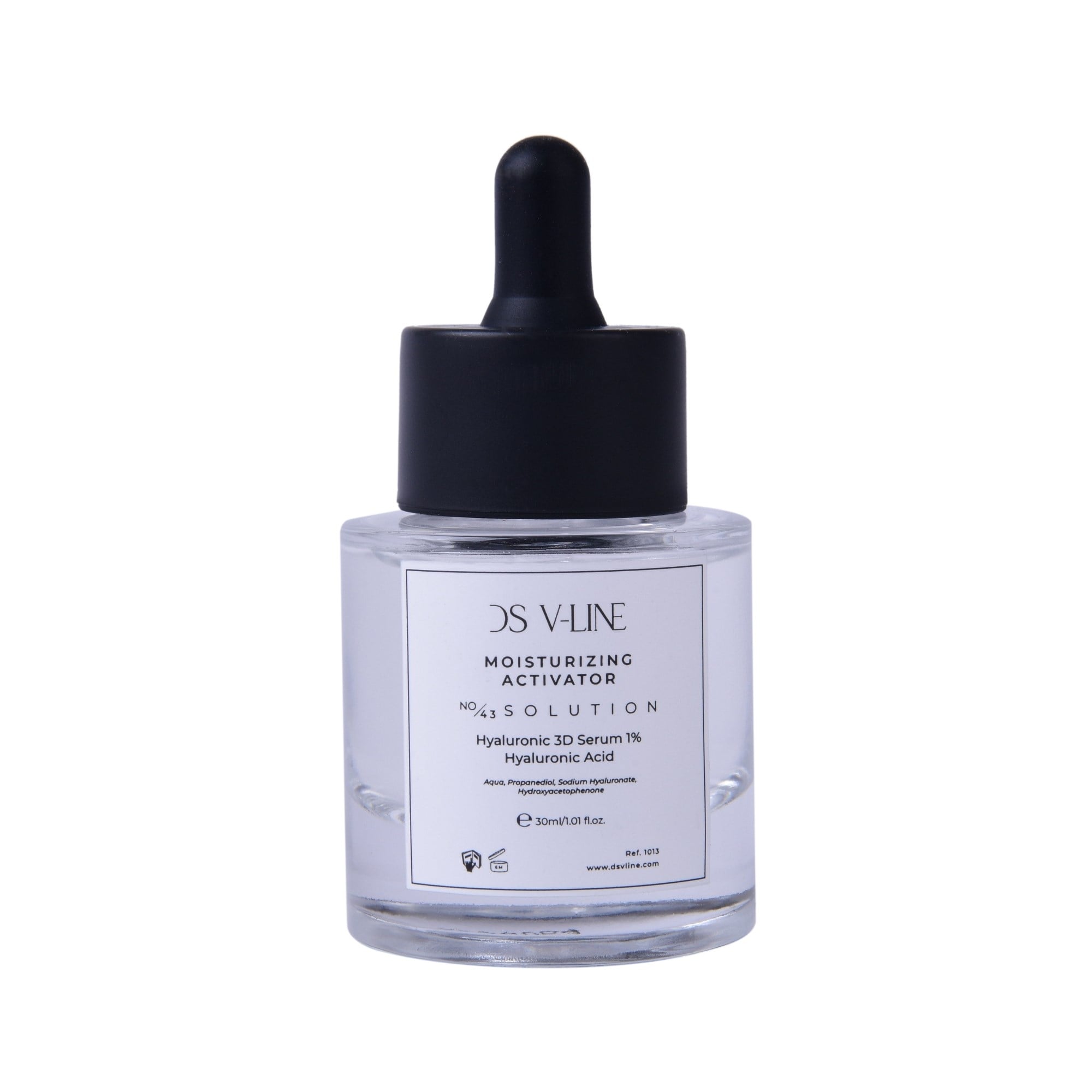
Neither vitamin C nor niacinamide should replace the hydrating and moisturizing foundation of a routine for dry skin. If dryness is accompanied by dullness and an uneven-looking complexion, vitamin C may be the more targeted additional active. If your focus is more heavily on supporting the skin barrier and maintaining a balanced-looking complexion, niacinamide can be an interesting option. But when dehydration itself is the main concern, adding more active ingredients is not necessarily the answer. A hydration-focused serum such as the DS V-LINE 43 Moisturizing Hyaluronic 3D Serum and a suitable moisturizer may deserve priority before introducing another targeted active.
Vitamin C or Niacinamide for Sensitive Skin?
The formulation matters just as much as the ingredient name on the front of the product.
It is too simplistic to say that everyone with sensitive skin should automatically choose niacinamide over vitamin C. Concentration, formulation, other active ingredients and individual tolerance all matter. This is particularly important when comparing the actual DSVLINE products rather than vitamin C and niacinamide in theory. The 45 Brightening Niacinamide Serum contains 5% glycolic acid in addition to 15% niacinamide, meaning someone looking for a very simple niacinamide formula should take the exfoliating component into account. Similarly, vitamin C products can differ substantially depending on the form and formulation used. If your skin is easily irritated or your barrier currently feels compromised, simplifying the routine may be more appropriate than immediately choosing either active.
Vitamin C vs. Niacinamide: Which Should You Choose?
Use your main skin concern as the deciding factor rather than trying to follow skincare trends.
If your priorities are radiance, dull-looking skin, antioxidant skincare and visible signs of premature ageing, vitamin C is likely the more targeted starting point. If your priorities are visible pores, excess sebum, oily-looking skin and uneven-looking tone, niacinamide may make more sense. If dark spots or uneven-looking skin tone are the main concern, both ingredients can be relevant and the decision should depend on your additional skin needs. This is why there is no universal winner in the vitamin C vs. niacinamide comparison: the best ingredient is the one that solves the more important problem within your individual routine.
Quick Comparison: Vitamin C vs. Niacinamide
| Your Main Skincare Goal | Better Starting Point |
|---|---|
| Dull-looking skin | Vitamin C |
| Antioxidant skincare | Vitamin C |
| Visible signs of premature ageing | Vitamin C |
| Radiance | Vitamin C |
| Oily-looking skin | Niacinamide |
| Sebum balance | Niacinamide |
| Visible pores | Niacinamide |
| Uneven-looking skin tone | Both can be relevant |
| Dark spots | Both can be relevant |
| Dryness / dehydration | Prioritize hydration first |
| Sensitive or compromised skin | Depends on formulation and tolerance |
Can You Use Vitamin C and Niacinamide Together?
You do not necessarily have to choose between vitamin C and niacinamide.
The old idea that vitamin C and niacinamide should never be used within the same skincare routine is too simplistic. Both ingredients can form part of the same overall skincare plan, but that does not mean everyone benefits from layering several active serums during a single application. Formulation and individual tolerance remain important. With the DSVLINE products specifically, remember that the 45 Brightening Niacinamide Serum also contains 5% glycolic acid, so the decision should consider the complete formulation rather than niacinamide alone. Especially when introducing new products, separating them can make it easier to understand how your skin responds.
Should You Use Vitamin C in the Morning and Niacinamide at Night?
Separating the products can create a simple routine with a clear purpose for each active step.
If you want to incorporate both ingredients without layering them directly, dividing them between morning and evening is one practical option. The 47 Brightening Vitamin C Serum can be used as the targeted serum step in the morning before moisturizer and sunscreen. The 45 Brightening Niacinamide Serum is designed by DSVLINE for the evening, with an initial recommended frequency of 2–3 applications per week that can gradually be increased according to tolerance. This distinction is especially relevant because the DSVLINE niacinamide formula contains glycolic acid and therefore should not simply be treated like a basic everyday niacinamide serum. For a broader explanation of where serums belong in your routine, see our Skincare Routine Order guide.
Which Should You Start With: Vitamin C or Niacinamide?
Start with the ingredient that addresses the concern you notice most.
If your complexion primarily looks dull and you want to introduce antioxidant skincare, start with vitamin C. If excessive shine, visible pores and uneven-looking tone bother you more, niacinamide may be the more appropriate starting point. Introducing one targeted product first also makes it easier to evaluate your routine than starting vitamin C, niacinamide and several other active ingredients simultaneously. After you understand how your skin responds, you can decide whether adding the second ingredient would actually address another skincare need or simply make the routine longer.
Do You Need Both Vitamin C and Niacinamide?
A longer routine is not automatically a more effective routine.
You do not need both ingredients simply because both have useful skincare properties. If vitamin C already addresses your main concerns and your remaining routine provides sufficient cleansing, hydration, moisturizing care and sun protection, there is no requirement to add niacinamide. The same applies in reverse. A focused routine with one well-chosen active ingredient can make more sense than repeatedly adding products with overlapping purposes. Using both becomes particularly interesting when they address different priorities within your routine — for example, vitamin C for morning antioxidant care and a niacinamide-focused treatment for concerns related to sebum, pores and uneven-looking tone.
Frequently Asked Questions About Vitamin C vs. Niacinamide
Which is better: vitamin C or niacinamide?
Neither ingredient is universally better. Vitamin C is particularly relevant for antioxidant skincare, radiance and visible signs of premature ageing, while niacinamide is especially useful in routines focused on sebum balance, visible pores and uneven-looking skin tone.
Is vitamin C or niacinamide better for dark spots?
Both can be incorporated into routines focused on the appearance of dark spots and uneven skin tone. Vitamin C may make more sense when dullness and antioxidant skincare are additional priorities, while niacinamide can be particularly relevant when oily-looking skin and visible pores are also concerns.
Is vitamin C or niacinamide better for oily skin?
Niacinamide generally fits more directly into routines focused on oily-looking skin because of its role in supporting sebum balance. The complete formulation of the product should still be considered.
Is vitamin C or niacinamide better for pores?
Niacinamide is generally the more targeted choice when the appearance of visible pores is a primary concern, particularly when this occurs alongside excess sebum.
Can I use vitamin C and niacinamide together?
Yes, both ingredients can form part of the same overall skincare routine. Whether they should be directly layered depends on the individual products, their complete formulations and your skin's tolerance.
Which goes first, vitamin C or niacinamide?
There is no universal rule based solely on the ingredient names. Product formulation and application instructions should determine the order. Separating vitamin C and niacinamide between morning and evening is also a straightforward option.
Should I use vitamin C in the morning or at night?
Vitamin C can be incorporated into morning or evening skincare depending on the formulation. It is particularly popular in morning routines because of its antioxidant role. Sunscreen should remain the final protective step during the day.
Should I use niacinamide in the morning or at night?
Many niacinamide formulas can be used at different times of day, but individual product instructions matter. The DS V-LINE 45 Brightening Niacinamide Serum contains glycolic acid and is specifically recommended for evening use.
Do I need vitamin C and niacinamide in the same routine?
No. Choose active ingredients according to your actual skincare goals. If one product already addresses your main concern effectively, adding another active ingredient is not automatically necessary.
Can beginners use vitamin C and niacinamide?
Both ingredients can be incorporated into skincare, but beginners benefit from introducing targeted products gradually. Starting one new active at a time makes it easier to understand how your skin responds.